From Sangams to Stages: The Enduring Legacy of Cultural Literature Festivals
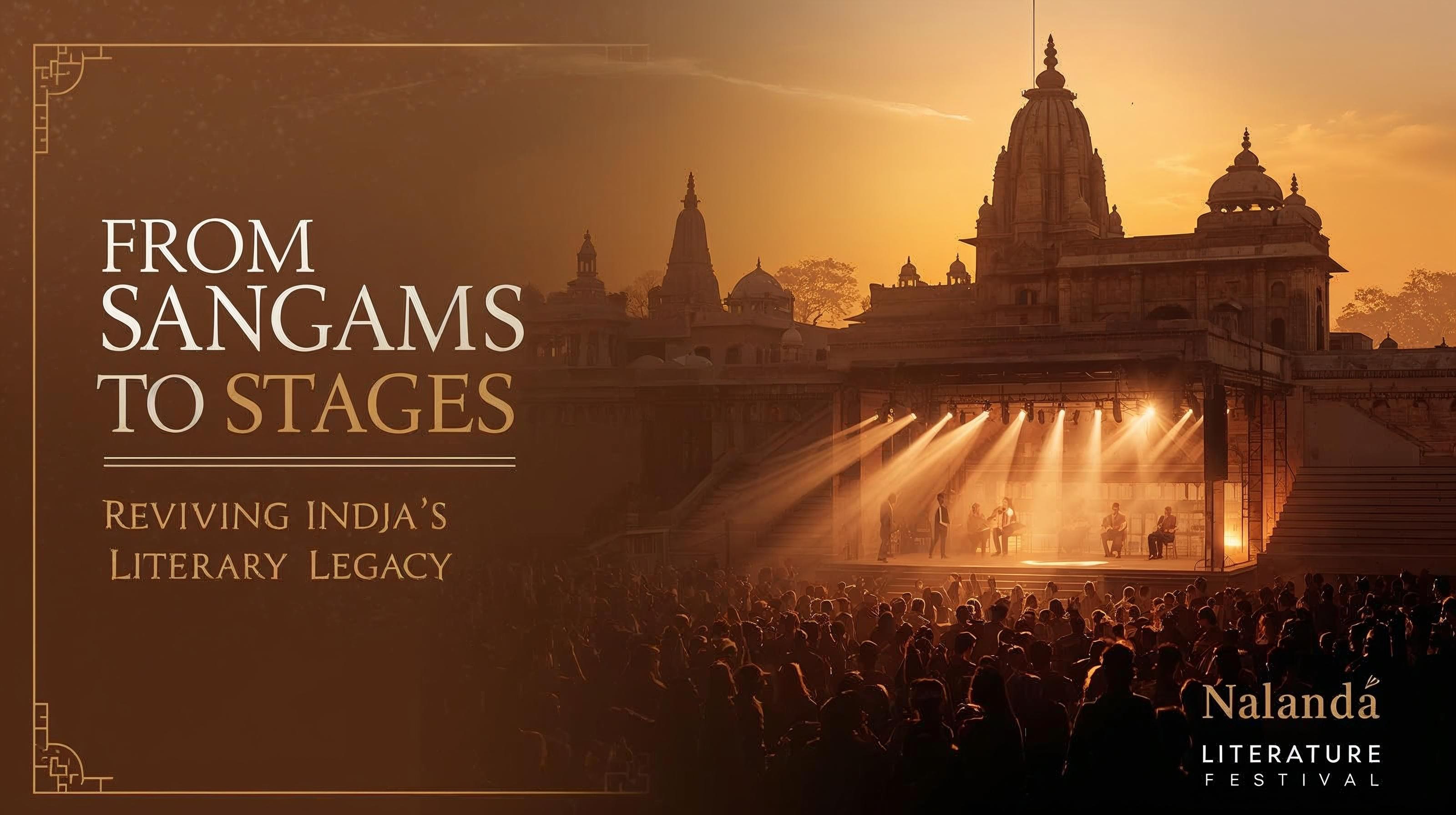
From Sangams to Stages: The Enduring Legacy of Cultural Literature Festivals
Literature festivals in India have perpetually been more than just a locus to exchange literary
interests. They have been a nucleus, a melting pot of cultures, ideas, and collective
experiences. Famously identified as sammelans, parishads, and sangams, the staging of these
cultural literature festivals has not been a colonial import. Rather, they are revivals and
refashioned versions of age-old traditions, coding a space where literature lives and breathes.
The Southern powerhouse of this tradition encompassed the Sangam assemblies that were
held in the city of Madurai under the patronage of Pandya kings. Also known as Muchchangam,
the cultural congregations involved participation from numerous Tamil poets, scholars, and
critics, who were ardently devoted to the composition, refinement, and preservation of
Tamil literature. Similar to the parallel discussion sessions, which are a part of contemporary
literature fests, the Tamil Sangams had three separate gatherings, namely Thenmadurai,
Kapatapuram, and Madurai, all of them occurring in different locations. These were foundational
to the early Tamil literature. In Northern and Central India, the King's court was considered to be
the site of literature festivals. The famous Navaratnas (Nine Gems) were the greatest minds in
Sanskrit literature, including Kalidasa. The idea of shaastrartha is rooted in these assemblies.
This included an active engagement in intellectual duels based on logic, aesthetics, and
grammar in front of the common masses.
Some unifying features of these cultural literary festivals across India involved active recitation,
singing, dancing, and narration, and not just bland reading and discussions. Furthermore, these
were essentially the pillars of the state, and not merely hobbies. Famous places like Nalanda
and Taxila were major hubs in Asia, where thousands of inquisitive scholars swarmed, making
the local stage global, for a truly international exchange of thoughts. Cultural literature festivals
in India have brought people together, celebrating the power of diverse voices and meaningful
conversations. They have fostered meaning and connection, besides preserving the cultural
legacy of the regions. The redefinitions of these cultural literature festivals may have taken the
shape of meet-and-greet, poetry slams, and workshops in the contemporary framework, yet the
overarching objective has retained its essence. They have fostered cultural heritage, promoted
local languages, brought people together on a platform for new voices to emerge and be heard,
enriching the rich literary landscape. Participating in any cultural literature festival today implies
that one is actively stepping into and involving into an almost 2,500-year-old circle, but in a new and
modern avatar.
(0) Comments